
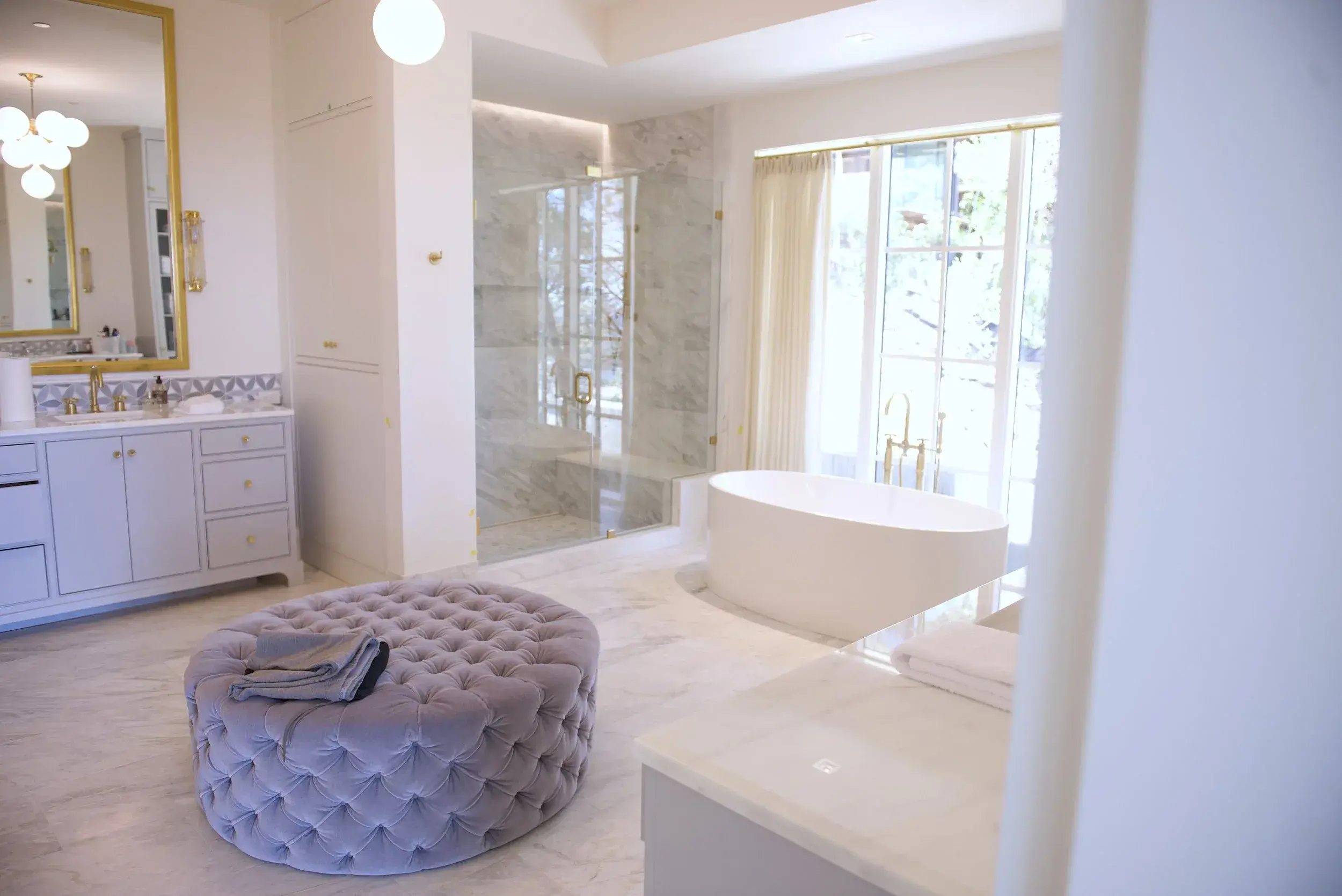
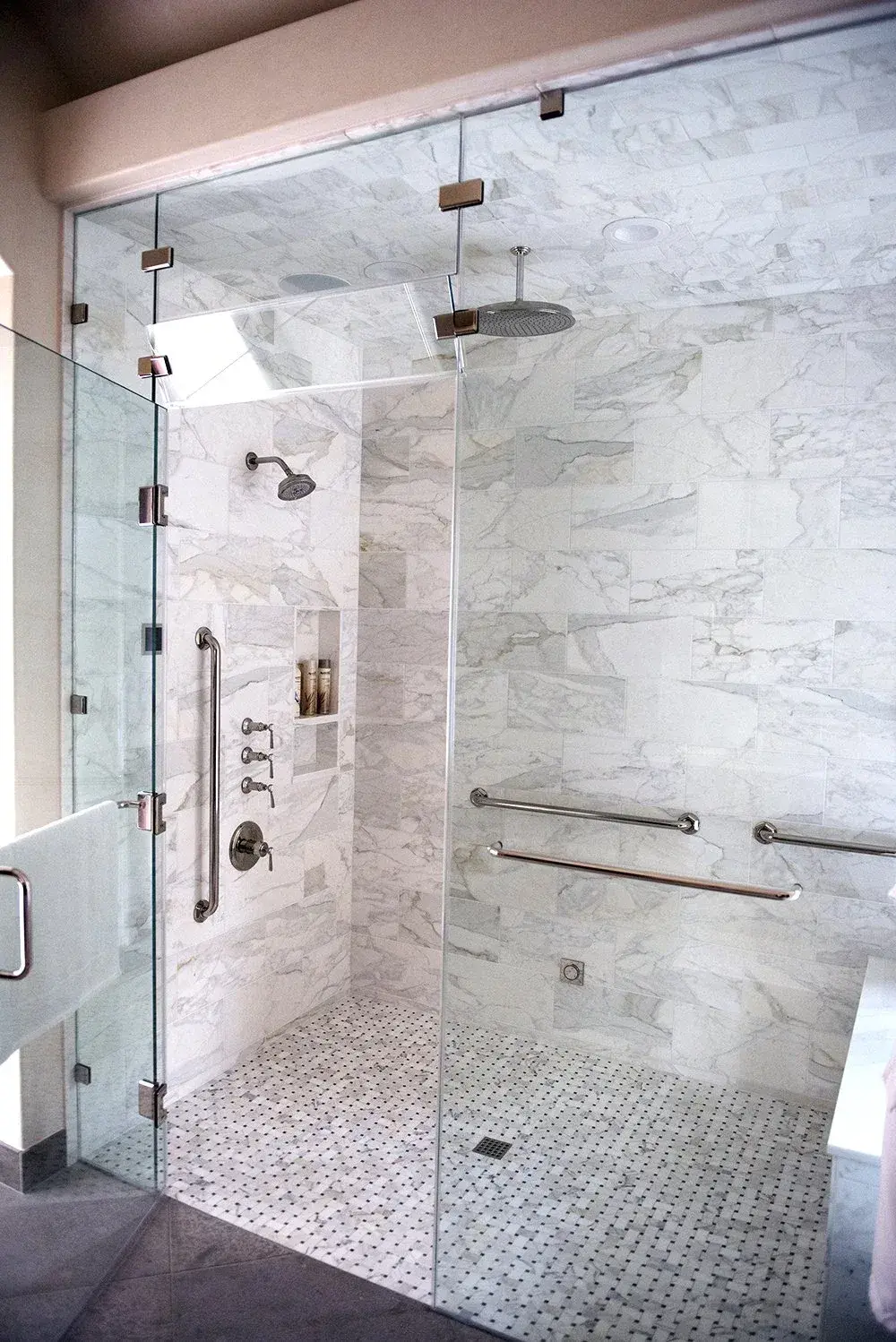
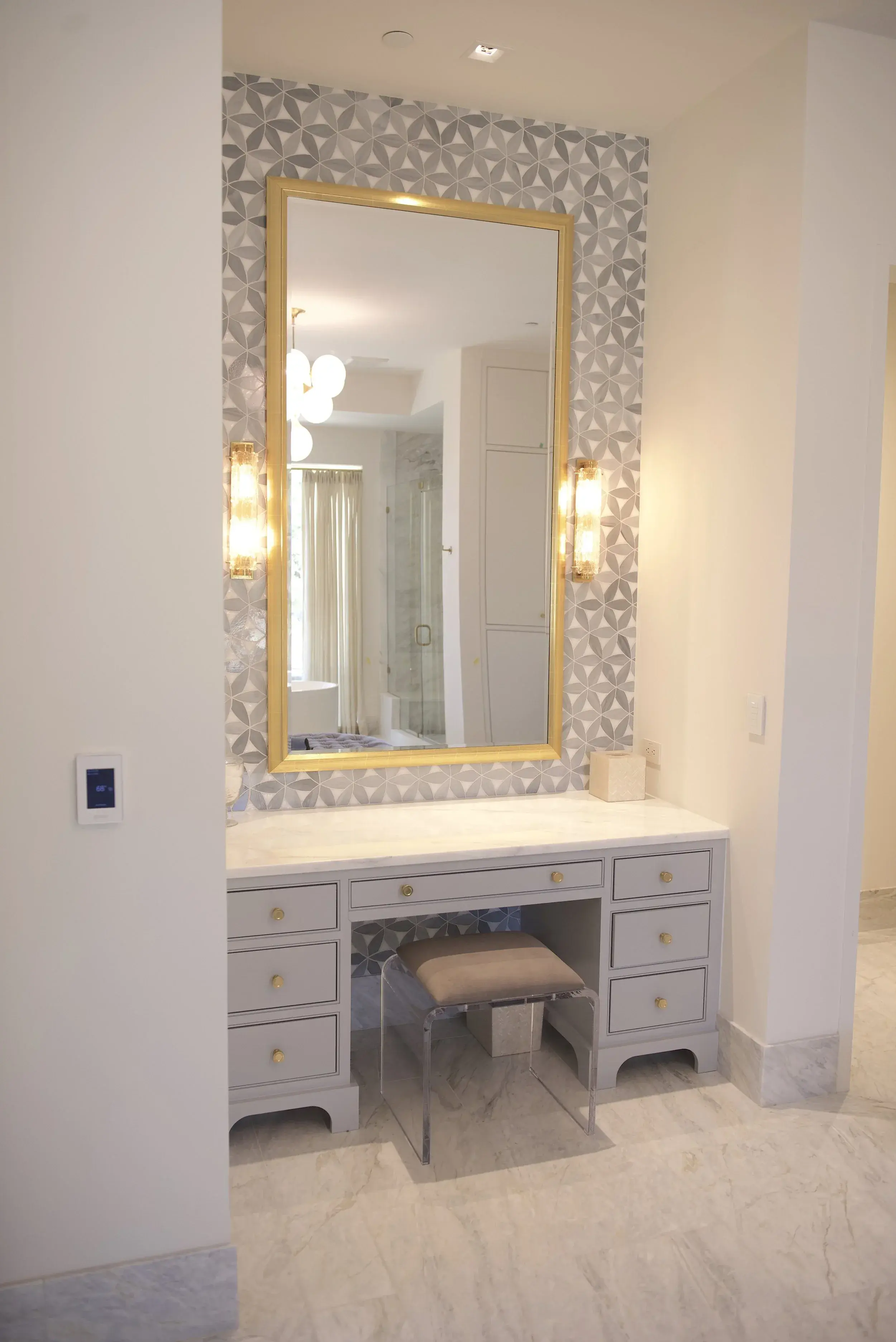
We excel at everything from full primary baths, to powder rooms, tub surrounds, vanity walls, heated floors, custom niches, mitered arches over doorways or windows, large-format porcelain floors, detailed mosaics, natural stone, and more. Custom Tile of Austin has been leading the craft of tile installation since 1983 - expertly installing tile in hundreds of bathrooms for homeowners, interior designers, general contractors and architects across Austin.
Custom shower installation is its own scope of work covered on a dedicated page. Here we focus on the rest of the bathroom: the floors, walls, tub surrounds, vanity walls, niches, arches and the integrated finishes that pull a primary bath together. Most of our remodels include the shower as one element of the larger room, and we coordinate the tile across every surface so the finished bathroom reads as one design.
The kinds of bathroom Tile we install
A bathroom is a series of tiled surfaces - floor, walls, shower, tub surround, niches, vanity backsplash - and the way they relate to each other is what makes the room feel resolved. Most of the projects we run land in one of these categories:
- Primary bath and master bath remodels. Full-room rebuilds where the floor, walls, shower, tub surround, and vanity walls all get tiled as one coordinated package. Often natural stone or large-format porcelain on the floor, designer tiles for the walls in the shower, an accent material in the tub surround, and a smaller-format detail tying it together. The category that takes the most planning and the one where the design payoff is highest.
- Powder rooms. Smaller footprints with the same craftsmanship. Often where designers test a high-end material like zellige, encaustic cement, antique mirror, or a slab feature wall before specifying it on a primary bath. A powder room is where a single dramatic tile decision can carry an entire room.
- Tub surrounds. Replacing aging fiberglass surrounds or older tile with a fully custom build around the existing tub or a new freestanding install. Mitered edges, built-in niches, integrated shelves, metal trim, pencil trim or bullnose, and continuous tile from the tub up the wall, all worked into the build.
- Secondary and guest baths. Same craft, different material budget. Often a more durable porcelain on the floor and a lighter, more decorative material on the walls. Built to the same waterproofing and TCNA standards as a primary bath.
- Heated floors as part of the bathroom build. Integrated radiant heat under the floor (and optionally on the shower floor as well) installed during the tile work. We sequence the heating mat install with the substrate prep so the warmth runs evenly across the room rather than hot-spotting.
- Vanity walls and accent walls. A single feature wall behind the vanity, a wainscot band around the room, or a continuous run of tile from floor to ceiling on one side of the bath. Often the design move that makes a bathroom feel like a room rather than a utility space.
Custom niches, mitered edges, integrated bench seats, custom bullnose, heated floors, and full-bathroom wet rooms all show up across these formats. Most are decisions that get made in the first design conversation.
How we build a bathroom that lasts
A bathroom is the wettest room in a house and the one that sees the most concentrated wear. The tile, the substrate, the waterproofing, and the transitions between surfaces all have to work as one system. Built correctly, a tile bathroom lasts for decades. Built incorrectly, the failures show up fast: efflorescence at the floor, mildew along the grout lines, hairline cracks at the tub-to-tile joint, a soft or hollow spot under the floor that signals the substrate is failing.
Every bathroom we install starts with substrate prep and waterproofing planned to the room. Floors go over a properly prepped slab or subfloor with an uncoupling membrane (Schluter Ditra is what we use most often) to handle expansion and protect against the foundation movement that’s common in Central Texas. We can also seal it and run it up the wall for a fully protected wet room. Wet zones, including the shower, tub surround, and behind-tub feature walls, can get a full waterproofing system specified to the assembly, with the same Schluter Kerdi, Hydro Ban, or floated mortar bed approach we use on standalone showers. Or, based on client preference, a different system can be specified, and we walk through the options and warranty implications before any membrane goes down.
Tile is set to TCNA standards. Outside corners can be mitered rather than capped with bullnose or trim, which is the detail designers ask for first when they walk a finished bathroom. Custom bullnose can be created for rounded edges where metal or other trim isn’t preferred. Niches are framed and waterproofed before tile lands on the wall. Floor-to-wall transitions, tile-to-stone transitions at the vanity countertop, and tile-to-wood transitions at the doorway all get worked out in the layout phase so the finished room reads as one continuous design rather than a series of patches. Grout is color-matched and selected for joint width, with unsanded grout used on narrow-joint zellige and handmade tile.
Heated floors get installed as part of the substrate sequence when they are part of the design. We typically use a low-profile electric radiant mat under the tile, wired to a thermostat. The mat goes down before tile, the thermostat gets set during commissioning, and the floor is ready to use the day the project closes out. These mats can also act as a waterproofing and decoupling membrane, while sometimes offering sound dampening.
The owner, Paul, is on every job site. He is there in the morning when the crew arrives and at the end of the day when they wrap up. The job site is cleaned daily and communication with the client is consistent. There is no project manager between you and the person actually responsible for the work.
“Small mistakes in a bathroom tile installation can become costly. That’s why we take every measure and that extra beat to get it right and double down on every verification to ensure the substrate prep, installation and all the materials come together to make your dream bathroom not only beautiful, but long lasting.”
Who we work with
We work best with homeowners, designers, and builders who want a bathroom built as one connected design rather than a series of separate finish decisions. Our typical project is a primary bathroom remodel or a new build in the West Austin corridor where the budget supports natural stone, slab walls, custom niches, heated floors, and the waterproofing systems that protect them. We coordinate directly with plumbers, electricians, cabinet makers, and glass fabricators so the tile sequences in cleanly and the finished bathroom reads as one room rather than a stack of trades.
If the goal is the lowest bid, we are not the right fit. If the goal is a bathroom that looks the way you or your designer dreamed and still looks that way decades from now, we are.
Materials and trade partners
We install ceramic, porcelain, natural stone, glass, mosaic, large-format tile and slab in bathroom environments. The materials we work with most often come through long-standing relationships with Ann Sacks, Materials Marketing, Architerra, Stone Solutions, Travis Tile, Daltile, and Emser. Each of those shops has in-house designers who can walk you through specification before tile reaches the site, and if you are already working with your own designer or a general contractor who has a preferred tile partner, we coordinate with them directly.
Frequently asked
How long does a tile bathroom take to build?
A primary bath remodel where the floor, walls, shower, and tub surround all get tiled typically runs two to four weeks from demo to final grout, depending on tile complexity, waterproofing system, heated floor inclusion, and the rest of the renovation around it (cabinetry, plumbing, electrical, glass). Smaller secondary baths and powder rooms can wrap up in one to two weeks.
Do you do the whole bathroom or just the tile?
Tile is our scope. We coordinate directly with the plumber, electrician, cabinet maker, glass fabricator, and general contractor (or act as the lead trade if there is no GC) so the tile work sequences in correctly with everything else. Many of our clients hire us as the tile specialist inside a larger remodel run by a GC; others bring us in to lead a tile-focused refresh.
Do you do heated floors?
Yes. Heated bathroom floors and heated shower floors get installed as part of the tile work. We use low-profile electric radiant mats wired to a thermostat. The system gets installed during substrate prep and is ready to use the day the bathroom closes out.
Do you do tub surrounds without rebuilding the whole bathroom?
Yes. A tile refresh on a tub surround can really elevate a space without a full remodel. We can often preserve the existing tub and bring new life to the surround, the niche, and the wall above with a coordinated tile design.
What about the shower? Is that a separate project?
The shower is its own scope of work with its own waterproofing and craft considerations, and most of our bathroom remodels include a custom tile shower. We treat the shower as one section of the larger bathroom build, coordinated with the rest of the tile so the materials, grout colors, and transitions all read as one design.
Is the demolition of the old bathroom dusty and do we need to be out of the house?
We use a 99+% dust-free demolition crew so your house stays as clean and sanitary as possible during the work. You won't need to move out for the renovation. If the bathroom is the only one in the house, we will work with you on phasing or temporary arrangements before demo starts.
Do you do powder rooms?
Yes, and powder rooms are often where the most interesting design decisions get made. A small footprint and no shower means a designer can specify a single dramatic material like zellige, encaustic cement tile, slab marble, or antique mirror and carry it across the entire room.
Do you handle Austin's foundation movement?
Yes. Central Texas slab movement, the result of expansive clay soils that swell and shrink with moisture, is a real consideration on tile floors. If this is a concern or issue in your area we use uncoupling membranes (typically Schluter Ditra) under floor tile to absorb the movement, and we plan layouts so cuts at slab transitions don't telegraph into the finished floor.
How do I get an accurate estimate?
We need to see the space, take measurements, look at the substrate condition, and talk through the design with you on site. A rough ballpark is possible over the phone with a few details, but the firm number comes after the site visit where options are discussed and exact measurements taken.